
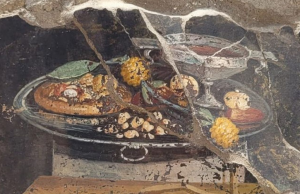
According to scientists, a 2,000-year-old painting found in Pompeii may depict a “distant ancestor” of the modern-day pizza.
The artwork was found on the wall of an ancient home being excavated, although the cuisine it represents is a little different than the modern-day Friday night takeout meal.
The “pizza” looks like a flat focaccia bread that has been seasoned with spices instead of the iconic ingredients of tomato and mozzarella.
And while 21st-century pizza aficionados would recognize a goblet of wine served on the silver tray, the majority of us would select a side of garlic bread over dried fruit.
Just 13 miles (23km) away, in Naples, is where UNESCO has granted protection of the traditional art of pizza making.
Pompeii, was not identified until the 16th century when it was discovered that Mount Vesuvius’ eruption about 2,000 years ago had destroyed the city.
To stop years of deterioration and neglect, there has been a surge in archaeological efforts in recent months.
Gennaro Sangiuliano, Italian culture minister, said, “Pompeii never ceases to amaze, it is a casket that always reveals new treasures.”
The director of Pompeii’s archaeological park, Gabriel Zuchtriegel, thinks the artwork serves as a reminder of how far the simple pizza has come.
“How can we fail to think, in this regard, of pizza, also born as a ‘poor’ dish in southern Italy, which has now conquered the world and is also served in starred restaurants,” Zuchtriegel said.